“Mitti ka tan, masti ka man, kshan-bhar jeevan — mera parichay.”
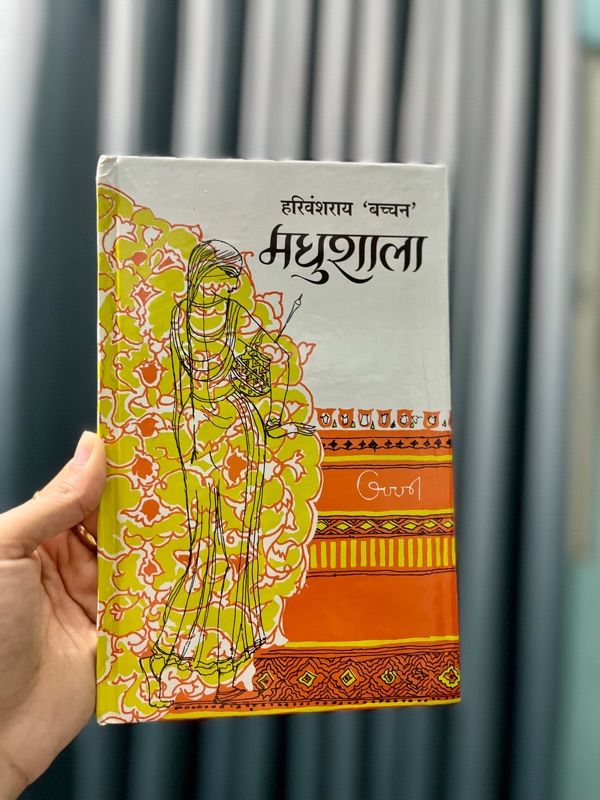
I think most of us have heard of Madhushala since childhood — though many may not have actually read it. I remember watching Amitabh Bachchan recite its verses on award shows, reality shows, and even on KBC. A few years ago, I finally decided to pick up a copy for myself, and to my surprise, I realised it might be the longest poem I’ve ever read — or will ever read. A true gem of Indian literature, Madhushala has 135 verses, each one as thoughtful as the next. Recently, while looking for another book on my shelf, I came across it again, read through a few pages, and felt like sharing it here.
Madhushala is one of the most celebrated works in Hindi poetry, written by the legendary Harivansh Rai Bachchan. While it speaks of wine, taverns, and cups, it is not about drinking in the literal sense. These are thoughtful metaphors used to reflect on life, emotions, struggles, and dreams.
For Indian readers, Madhushala holds a special place — it feels deeply connected to our roots, our way of thinking, and our culture. It beautifully captures how we, as individuals, move through joy and sorrow, how we love, lose, and still carry on in search of meaning.
Madhushala is not just about a bar or a place where people drink. It is a powerful symbol used by the poet to speak of life itself.
In this poetic world, “wine” stands for feelings like happiness, pain, truth, and even wisdom.
The “cup” represents the different experiences we go through.
And the “tavern” — Madhushala — becomes a symbol of life’s journey, our search for purpose, and the many emotions that come along the way.
So when Harivansh Rai Bachchan says Madhushala, he is really talking about that space — within or around us — where we truly live, feel, and experience every shade of being.
“Saaki, paane ki chah mein, sab kuch kho jaata hai insaan.”
What truly sets this poem apart is the way it is written — gentle yet powerful.
Each verse ends with the word madhushala, creating a rhythm that flows like music and stays with you long after you’ve read it. The language is simple, yet the thoughts are rich and deep.
Madhushala is much more than a collection of poems — it is a mirror to life itself.
“Jeevan ke sukh-dukh sab, ek nasha ban jaate hain madhushala mein.”
AS: Happy Reading! 😀
Comments
Post a Comment