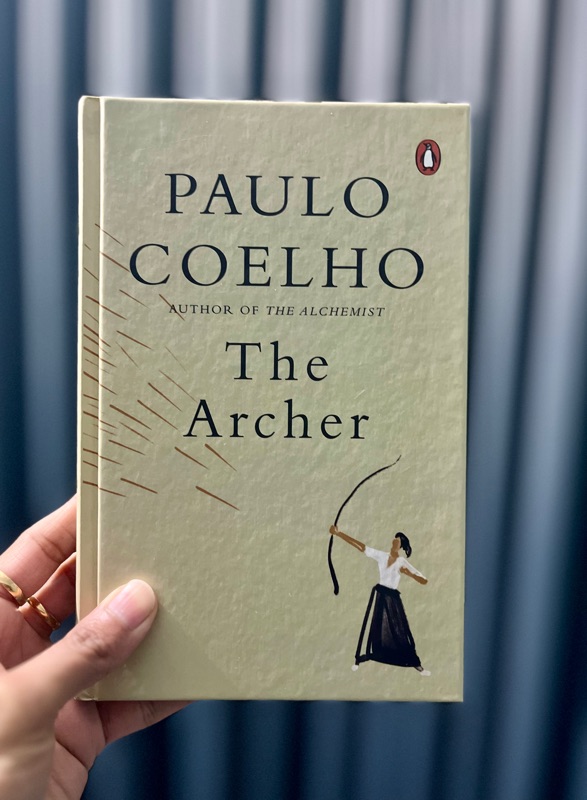
Paulo Coelho shares a special kind of wisdom that helps readers feel calm, positive, and think beyond chasing material things that don’t matter in the long run.
In The Archer, Tetsuya, a great archer who has left his craft behind to live as a carpenter in a small village, teaches a young boy about the art of archery. Through simple and practical examples, he shows that archery is not just about skill but also about understanding life.
The book highlights how important it is to have a mentor—someone who can guide you and help you find meaning in life. The story begins with a young boy searching for Tetsuya, hoping to learn from him.
One key idea in the book is “An action is a thought made real,” reminding us to stay mindful of what we do and how it shapes our lives. The story also talks about the balance between good and bad experiences and the importance of relationships, whether they are with friends or rivals, as they both help us grow.
The book also warns about the dangers of fame and stresses the importance of doing what you love because that’s what keeps you happy and grounded. Reading this book is a meaningful experience, encouraging readers to reflect on their lives and goals while staying mindful of their journey.
The writing is simple and beautifully done, making it easy for readers to connect with the story. Every page is filled with thoughtful words and imagery that make you stop and think. It reminds me of The Boy, the Mole, the Fox, and the Horse by Charlie Mackesy.
If you love Paulo Coelho or enjoy books that inspire deeper thinking and a sense of purpose, The Archer is for you. It’s a great choice for those who like light, meaningful stories with a touch of inspiration.
Here’s a beautiful quote from the book about mastering a skill:
“The archer learns when he forgets all about the rules of the way of the bow and goes on to act entirely on instinct. In order, though, to be able to forget the rules, it is necessary to respect them and to know them. When he reaches this state, he no longer needs the instruments that helped him to learn. He no longer needs the bow or the arrows or the target, because the path is more important than the thing that first set him on that path.”
AS: Happy Reading! 😄
Comments
Post a Comment